
3 Small Practice Mistakes That Cost $100k+ in 2026 (And How to Avoid Them)

Hey there. It’s Friday, March 27, 2026, and if you’re running a solo practice or a small clinic, the coffee probably isn’t the only thing keeping you up this morning. Between the Cassidy-Warner Bill (S. 3315) settling into law and the massive 2026 HIPAA Refresh that went into effect earlier this year, the regulatory landscape has shifted beneath our feet.
I’m Darlene Collins. Before I founded Veri-Se3ure, I spent over 30 years as an RN and BSN, and another 25 years in the trenches of EHR implementation for systems like Epic and Cerner. I’ve seen the healthcare industry from the bedside to the server room. I know how much you care about your patients, and I also know how easy it is to let "paperwork" slide when you’re focused on care.
But in 2026, "sliding" on compliance is costing small practices six figures. The Office for Civil Rights (OCR) isn't just looking for the giants anymore; they are looking for documentation. If you can’t prove you’re protected, you’re a target.
Let’s look at three recent enforcement actions that serve as a wake-up call for every small practice owner.
1. The "We'll Get to It" Risk Analysis: Top of the World Ranch ($103k Fine)
We’ve all been there. You know you need a Risk Analysis, but you’re busy. You figure as long as you have a password on your laptop, you’re fine. Unfortunately, the Top of the World Ranch learned the hard way that "intent" doesn't satisfy an auditor.
They were hit with a $103,000 fine primarily because of a lack of documentation and a failure to perform a comprehensive HIPAA Security Rule Risk Analysis.

The 2026 Twist: Addressable is now Mandatory
In the past, some parts of the HIPAA Security Rule were labeled "addressable," which many small practices misinterpreted as "optional." Under the 2026 HIPAA Refresh, that grey area has vanished. If a safeguard is addressable, you must either implement it or document: with clinical-level precision: why it isn’t reasonable and what equivalent measure you put in its place.
Most solo providers are still operating on 2022 standards. If you haven't updated your HIPAA technical safeguards, you are essentially walking around with an open wound in your practice’s security.
How to avoid this: You need a centralized place to store your Risk Analysis and annual updates. This is why we built the Veri-Hub Compliance Dashboard. It doesn't just give you a folder; it gives you a framework to maintain professional, HIPAA-aligned security policies that are actually relevant to a small clinic, not a 500-bed hospital.
2. The Notification Lag: MMG Fusion and the 24-Hour Clock
When a security incident happens, the instinct is to fix it first and talk later. However, the MMG Fusion case highlighted a critical failure in breach notification timing. In the current 2026 regulatory environment, the window for reporting is tighter than ever.
The Cassidy-Warner Bill (S. 3315) has pushed for even stricter reporting windows, with some "high-impact" incidents requiring notification within a 24-hour window. If you are manually tracking your security incidents in an Excel sheet: or worse, just trying to remember them: you’ve already lost.
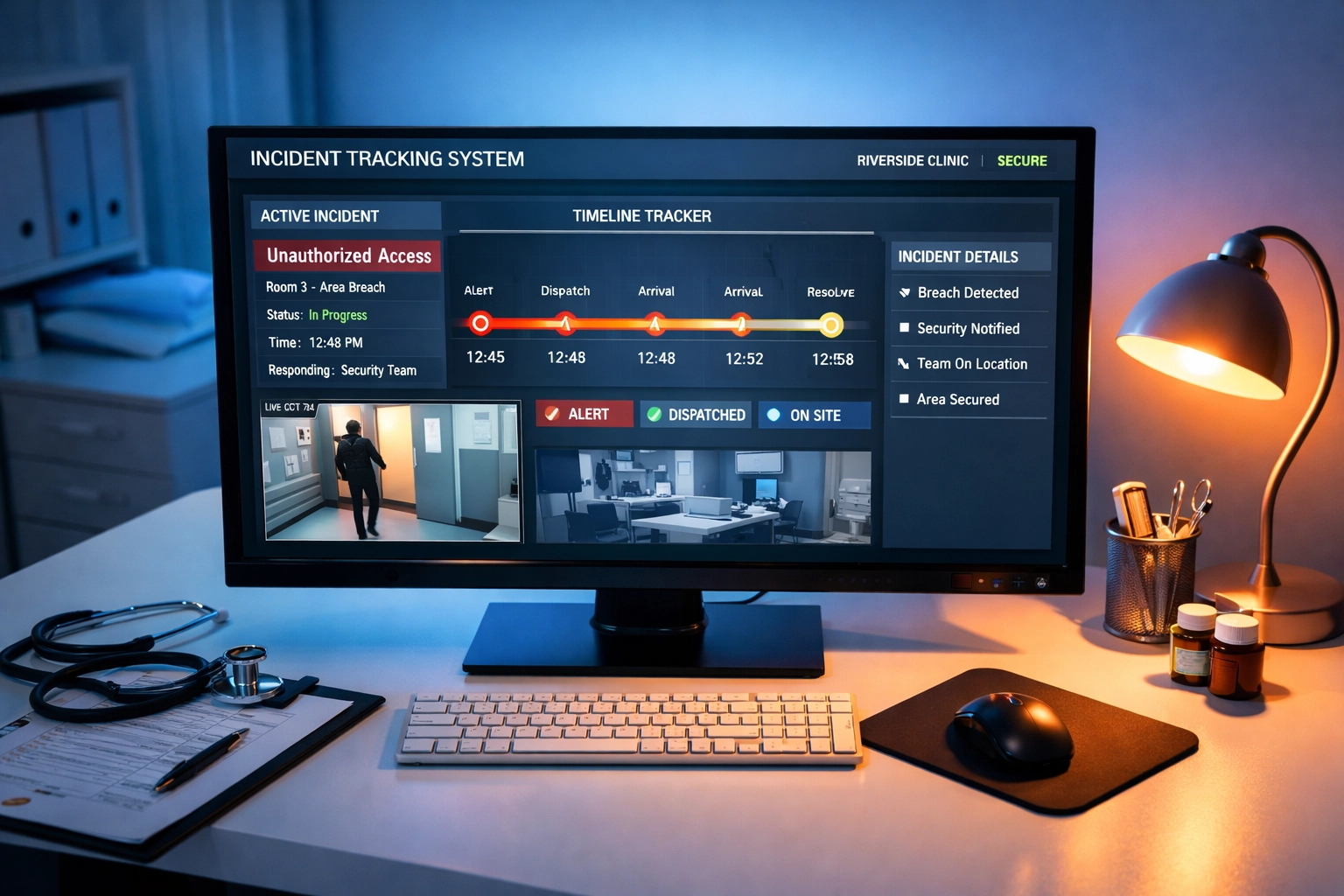
Why Automation is Your Only Defense
Small clinics often miss the reporting window because they don't realize the "clock" starts the moment the incident is discovered, not when you finish investigating it. MMG Fusion’s delay turned a manageable situation into a massive liability.
Solo providers often think, "I'm too small for a breach." But small practices are actually preferred targets because hackers know you likely don't have a 24/7 IT security team. If you're making these common compliance mistakes, you're essentially inviting the OCR to check your logs.
How to avoid this: Veri-Hub features an Instant Incident Reporting tool. It centralizes your incident response reporting so you can record and manage events in real-time. Instead of panicking and searching for the right form, you follow a guided process that ensures you meet the strict 2026 reporting windows.
3. The "Right of Access" Trap: Concentra ($112k Fine)
This one hurts because it’s so avoidable. Concentra was hit with a $112,000 fine for failing to provide a patient with their records in a timely manner. This falls under the "Right of Access" initiative, which the OCR has been hammering for years: and in 2026, they have zero patience left.
Patients today expect their data to move as fast as their social media feeds. If a patient requests their records and your front desk staff puts it in a "to-do" pile that sits for three weeks, you are in violation.

The Burden on the Solo Provider
In a small clinic, you are the CEO, the lead clinician, and often the records clerk. It’s easy to let a request slip through the cracks. But the OCR doesn't care that you had a flu outbreak in your waiting room. They care that the patient didn't get their data within the mandated timeframe.
How to avoid this: You need centralized request logs. Veri-Hub allows you to track these requests alongside your other compliance tasks. By having a single dashboard that monitors employee access levels and record requests, you ensure that no patient request is forgotten.
How Veri-Hub Fixes the "Small Practice" Problem
As a nurse who has spent years implementing complex EHR systems, I saw a gap. Big hospitals have teams of lawyers and IT pros to handle the 2026 HIPAA Refresh. Small practices have... you.
That’s why we created Veri-Hub. It’s a HIPAA technical security and compliance platform built specifically for solo providers and small clinics. We don't do "enterprise complexity." We do clear, audit-ready documentation.
Our platform centralizes the four pillars you need to stay safe:
Document and Track Employee Access Levels: Know exactly who has access to what, and more importantly, revoke it the second they leave.
Assign and Monitor Annual Cyber-Awareness Training: Our Awareness Defense Training ensures your team is your first line of defense, not your weakest link.
Record and Manage Incident Response Reporting: Stop the clock before the OCR does.
Maintain Professional, HIPAA-Aligned Security Policies: Use our Veri-Se3ure Policies library to stay current with the latest laws, including the Cassidy-Warner requirements.
By eliminating scattered documents and providing a clear audit trail, Veri-Hub gives you the evidence you need to prove your security posture to any auditor.
Protect your business. Empower your team. Stay ahead of threats.
Don't wait for a $100k mistake to find you. Book a consultation/demo today and see how we can get your practice audit-ready in minutes, not months.
Darlene’s March 2026 Compliance Corner
1. Audit-Readiness Blurb
In 2026, "I didn't know" is not a legal defense. With the Cassidy-Warner Bill influencing how the OCR conducts audits, the focus is now entirely on Technical Proof. You must be able to show, within minutes of an auditor's request, exactly when your last risk assessment was completed and who has access to your PHI. If it isn't documented in a centralized dashboard, it didn't happen.
2. OCR Audit Tip: The "Right of Access" Checklist
Timestamp Everything: Log the exact minute a patient request for records is received.
Verify Identity: Ensure you have a documented process for verifying the requester's identity that doesn't create "unreasonable" delay.
Format Matters: If the patient asks for a digital copy, you must provide it in the format requested if it is "readily producible."
The 2026 Window: While the federal limit is 30 days, many state laws and the new Refresh guidelines encourage a "no-delay" policy. Aim for 7 days to stay out of the red zone.
3. Awareness Training Tip: Spotting 2026 Phishing
AI-Generated Voice Phishing: Warn your staff that "vishing" now uses AI to mimic your voice or a vendor’s voice perfectly.
Check the "From" Header: Always hover over the email address; hackers are getting better at spoofing local government domains.
Urgency is a Red Flag: Any email demanding "immediate HIPAA re-certification" or "fine payment" via a link is a scam.
Verify Offline: If a request seems odd, call the person back on a known, trusted number.
Document the Training: Use Veri-Hub to log that your staff has received this specific 2026 threat update.
Need help getting started? Download our Free HIPAA Security Rule & NIST Compliance Audit Checklist or reach out to us at Support@Veri-Se3ure.com.
Stay safe out there. Your patients trust you with their health; let’s make sure they can trust you with their data, too.


Comments